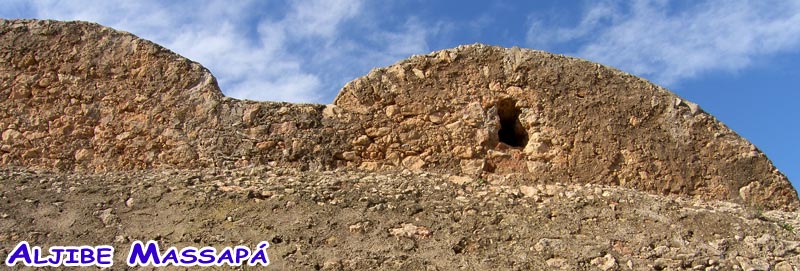
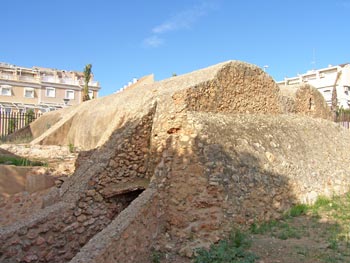
| Given the increase of the local population, mainly caused by the riches from the salt and fishing industries, the creation of water supply points was necesary; this was made by means of underground tanks for the collection and storage of rainwater from the rocky slopes of the mountain. Then, this water was sold along the streets in large earthenware jars carried on carts. In the Modern Age, with the expansion of cereal dry farming favoured by the new inhabitants and the subsequent population explosion that forced the colonization of wastelands far from any water source, cisterns spread out through all the territory. During the first half of the 20th century, all cisterns were working, but after the war, high emigration rates provoked the abandonment of agricultural production and the disappearance of traditional hydraulic cultivation.
|